
Finally, an opportunity arises to gasify municipalities near the plants
New Royal Decree on biomethane quotas: what changes and why it is an opportunity to “gasify” rural areas close to the plants
The public hearing process for the Draft Royal Decree establishing mandatory biomethane penetration quotas and adopting regulatory and technical measures for its development and integration into the gas network has now opened. The document sets out a progressive obligation pathway until 2035, introduces administrative and technical incentives, and prioritizes the use of existing infrastructure. For rural localities near biomethane plants that do not have gas access, these measures represent a real opportunity for efficient and sustainable territorial gasification.
- What does the Royal Decree require?: Quota scheme
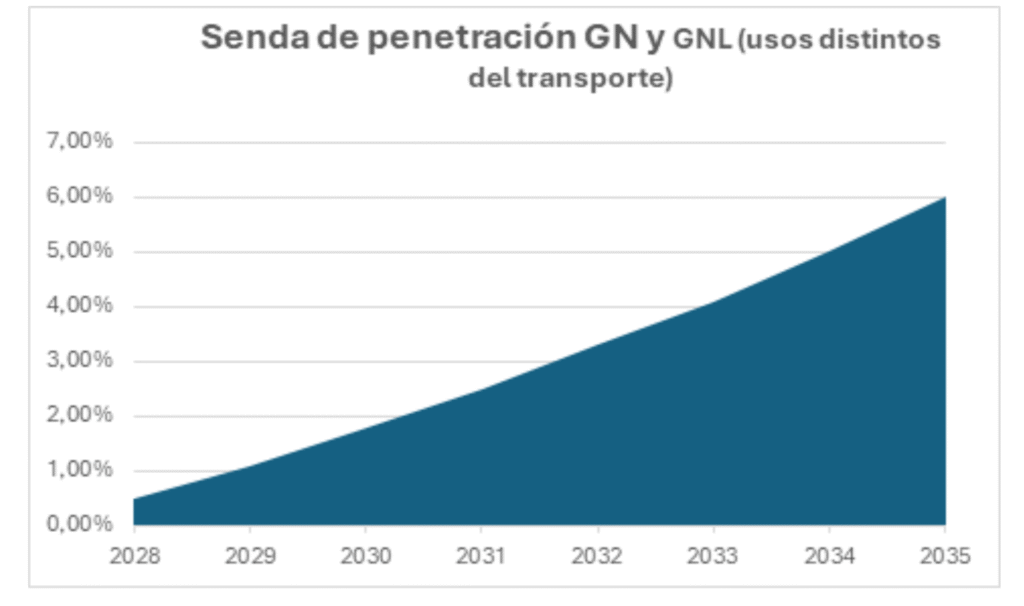
Obligated parties must certify that a minimum portion of the gas they consume or supply is certified as biomethane with guarantees of origin. The quota is calculated on the total annual amount of: natural gas and liquefied natural gas (LNG) for non-transport uses. The penetration pathway is progressive between 2028 and 2035: from 0.5% to 6%. From 2035 onwards, the 6% quota will remain in force until new regulation.
2. Relevant Exclusions
The following are not included in the calculation of the obligation: combined cycle power plants; island manufactured gas networks without connection to the peninsular system; land, sea, and air transport uses; and cogeneration facilities. These exclusions limit the scope of application and direct obligations towards continental stationary energy consumption.
3. Obligated Parties
a) gas marketers for their sales to end customers in Spain;
b) direct consumers in the market (large consumers who purchase gas without a marketer).
This design concentrates compliance on actors with the greatest capacity for traceability and supply control.
- What is considered “accredited” biomethane
Biomethane will be required to have:
- Guarantees of origin;
- Officially recognized sustainability and emissions reduction criteria.
This is key to avoiding greenwashing and ensuring that quotas contribute to real decarbonization.
- Promotion Measures and their Territorial Impact
The Royal Decree goes beyond just quotas: it incorporates concrete measures to facilitate deployment, prioritize projects with social and territorial impact, and optimize the use of the existing network.
-
- Social, Territorial, and Environmental Excellence Seal: A specific seal is created for new plants wishing to count towards the quotas. It will evaluate supply security, circular economy, decarbonization, local employment, environmental excellence, and territorial cohesion integration. This criterion seeks to favor projects designed with positive local and regional impact. Depending on its development, it can be a hindrance or a small boost.
-
- Plant Connection: Mandatory Transfer and Technical Clarity: The Royal Decree clarifies direct connection lines to transport or distribution and mandates that, even if the producer can build the line, they must then transfer it free of charge to the transporter or distributor. Objectives: integrate the infrastructure into the network, ensure regulated operation, and enable future third-party access. Furthermore, it limits the costs that can be passed on to the producer, preventing unjustified charges.
-
- “Reverse flow” equipment : Reverse flow equipment, which allows renewable gas to be sent from lower-pressure networks to higher-pressure networks, is recognized and regulated. It will be owned by the main network operator; the System Technical Manager will analyze needs annually, and the General Directorate will approve the equipment that will receive remuneration from the system. This is a key technical installation to leverage the distributed network and connect small rural plants without the need for major new construction.
-
- Maximize existing infrastructure: The guiding principle is to reuse the current gas network, minimize new investments, and accelerate connections. This reduces costs and deployment times, favoring the viability of projects in rural municipalities and opening the door to the connection of new consumers, industry, and additional development of nearby gas distribution networks, which will therefore be renewable gas.
-
- Regulatory development in 6 months: The Royal Decree mandates the development of technical standards, quality requirements, operating criteria, facility configuration, and connection and injection requirements within six months. Greater regulatory certainty is fundamental to mobilizing investment and projects at a local scale.
-
- Control and sanctioning regime: There will be annual supervision: obligated parties must submit accrediting reports. Non-compliance with quotas is considered a very serious infringement, with possible sanctions including disqualification of marketers or loss of authorization for direct consumers. This reinforces the mandatory nature and reliability of the system.
- Why this opens an opportunity for rural gasification:
- Use of existing network: the commitment to reuse the network and to reverse flow equipment reduces the need for new pipelines, making it viable to connect populations, in the vicinity of the plants, at a lower cost.
- Social integration and local employment: the social criteria of the seal and the valuation of local employment could increase the probability of projects with municipal acceptance and community participation.
- Regulatory certainty: technical standards and limits on cost pass-through incentivize developers and investors to design projects in areas with low gas coverage.
- Effective market mechanism: quotas create national demand for certified biomethane, which stabilizes revenues for rural plants that can produce and guarantee origin.
The Draft Royal Decree aims to establish a practical framework for scaling biomethane in Spain: it mandates increasing quotas, creates technical and social instruments to prioritize projects with territorial impact, and facilitates integration into the existing network. For rural municipalities without gas access, this is a window of opportunity for sustainable gasification: leveraging existing infrastructure to bring gas to villages near the plants and generate employment, energy resilience, and locally sourced biofertilizers.
#Biomethane #RenewableGas #RuralGasification #Biofertilizer #CircularEconomy #Decarbonization #IAMcarbonzero