CONVERSA Forum: Soria's energy future involves turning opportunities into real projects
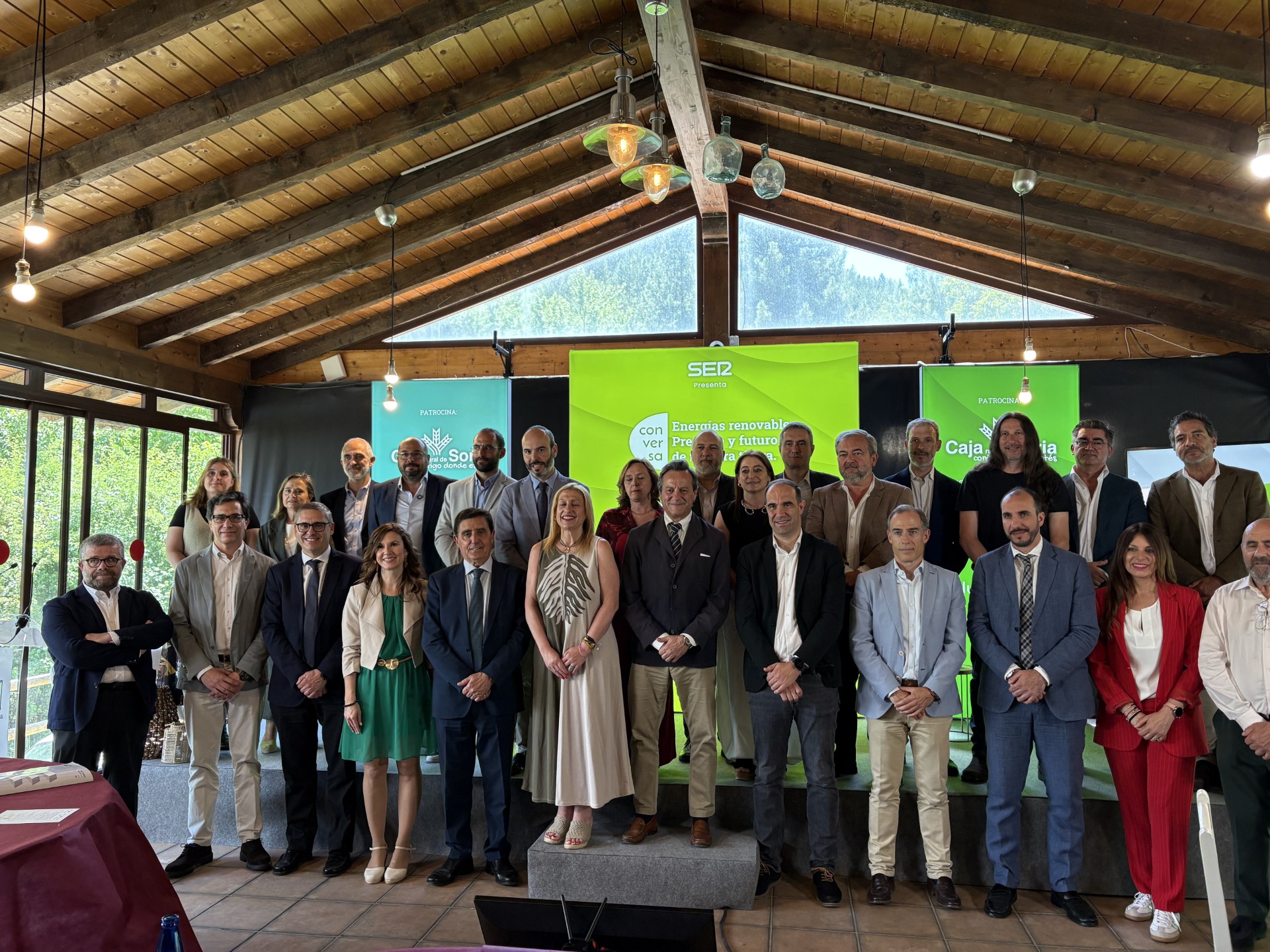
On May 28, Valdelavilla hosted a new edition of the CONVERSA Forum, organized by SER Soria, under the title “Renewable Energies. Present and Future of Our Land”, solidifying its position as one of the main platforms for reflection on the energy and economic future of the province.
The event brought together representatives from public administrations, energy companies, business associations, and sector experts to analyze the role renewable energies can play in the development of rural territories.
Among the notable participants were Joan Groizard, Secretary of State for Energy; Alfonso Arroyo, Director General of Energy and Mines of the Junta de Castilla y León; Roberto Arranz, Regional Delegate of Redeia; Alberto Santamaría, from the Energy Commission of the Spanish Chamber of Commerce; our CEO, José Marcos González Conejero, with a special focus on Biomethane, as well as representatives from Endesa, Naturgy, Iberdrola, CEDER-CIEMAT, FOES, Elyse Energy, Reolum Renovables, and various entities linked to territorial and energy development. The event was presented by Elena García, director of SER Soria, and Jordi Fábregas, economy director of Cadena Ser.
.
Energy development as an opportunity for the territory
Throughout the various panels and presentations, the need to reconcile the energy transition with the economic development of territories was highlighted, especially in provinces like Soria, where the demographic challenge continues to condition growth opportunities and investment attraction.
The production of renewable energy, the utilization of local resources, and the implementation of new industrial activities linked to the circular economy were some of the central themes of the debate.
Biomethane: an opportunity that goes beyond energy
Within the program, the conversation between Eva Sánchez, head of content at SER Soria, and José Marcos González Conejero, CEO of IAM Carbonzero, provided an in-depth look at the role biomethane can play as a tool for rural development.
During his speech, González Conejero recalled that the promotion of biomethane responds to a consolidated strategy in the European Union, where this technology has become an instrument to simultaneously strengthen energy security, the competitiveness of the primary sector, and the circular economy. He also highlighted that biomethane allows for the transformation of agro-livestock waste into energy resources and organic fertilizers, generating economic activity in the territory and contributing to improving the environmental management of strategic sectors such as livestock farming.
The real challenges for project development
One of the most relevant messages conveyed during the meeting was that the main obstacles to the development of new projects in rural areas are not technological.
The availability of capacity in energy infrastructures, especially in connection networks, continues to be one of the main conditioning factors for attracting new investments.
Added to this is the complexity of the associated administrative procedures for environmental, urban planning, and sectoral authorizations, whose processing requires greater resources and management capacity from public administrations.
Finally, the need to advance in dissemination and social dialogue was also addressed to promote an objective evaluation of projects, based on technical, environmental, and economic criteria. Social acceptance has become a determining factor for the development of any infrastructure linked to the energy transition.
The growing role of biofertilizers
The conversation also allowed for addressing one of the issues that is expected to gain prominence in the coming years: the agronomic valorization of materials obtained in biomethane plants. The application of Regulation (EU) 2019/1009 on fertilizing products and recent initiatives promoted by the European Commission within its Fertilizer Action Plan point towards greater recognition of organic and circular fertilizers as strategic tools to strengthen European productive autonomy and reduce external dependencies.
A reflection for the future
The CONVERSA Forum concluded with a shared sentiment among many participants: Europe has the technology, knowledge, and resources to advance its energy transition.
In territories like Soria, the challenge is no longer just about identifying opportunities, but about creating the necessary conditions for those opportunities to materialize.
Having adequate infrastructure, streamlining administrative procedures, and promoting public debate based on rigorous information will be decisive factors in turning the energy transition into a true development opportunity for rural Spain and its demographic challenges.
#Biomethane #EnergyTransition #CircularEconomy #RuralDevelopment #Soria #Renewables #Biofertilizers #EnergySecurity #IAMCarbonzero